Frame the decision
Research trained me to turn open-ended questions into hypotheses that can be tested.
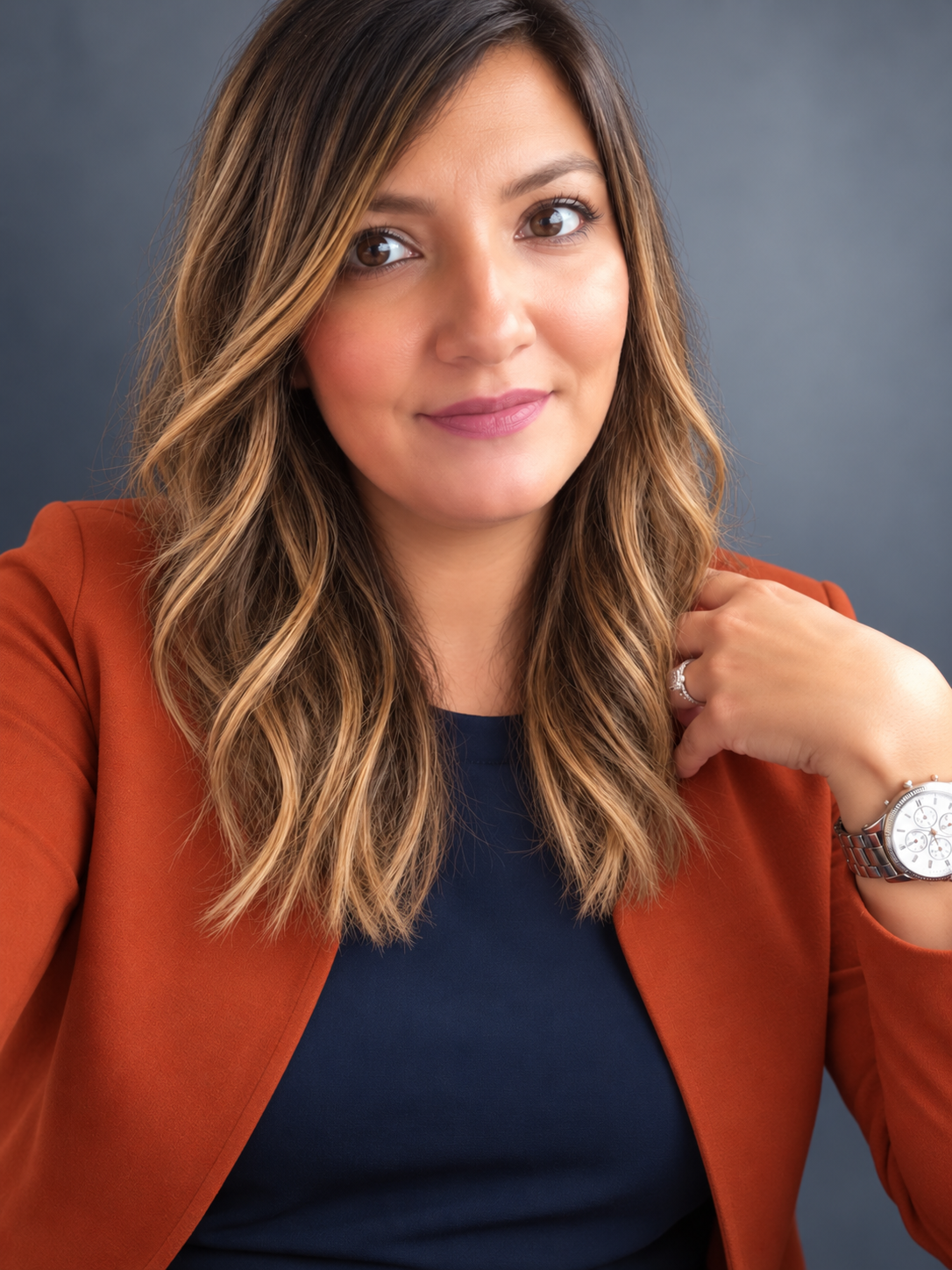
Pharmacist · PhD in computational structural biology
HEC Paris MBA candidate
My background connects pharmacy, computational biology and AI. Through an HEC Paris MBA, I am expanding that perspective to business, with a particular interest in embedding AI approaches into healthcare strategy and decision-making.
Sanofi Life Sciences Scholarship
I am interested in how scientific evidence, data and AI can inform healthcare strategy—from understanding opportunities to assessing value and shaping products. I enjoy conversations across strategy, transformation, market access and product teams.
Research trained me to turn open-ended questions into hypotheses that can be tested.
I analyse data, examine model uncertainty and explain what a result can—and cannot—support.
The MBA is where I develop the business perspective to connect scientific evidence with market, organisational and financial questions.
At Institut Pasteur, I implemented workflows combining AlphaFold predictions, uncertainty and biological reasoning to guide exploration of alternative conformations.
Evidence: implemented research workflows.
My doctoral work analysed 977 protein–RNA interfaces and 2,022 comparable pairs, with a first-author publication in PLOS Computational Biology.
Evidence: peer-reviewed analysis, software and visualisation.
I co-developed RNAPROTDB so researchers can explore protein–RNA interaction data through an interactive web platform.
Evidence: a publicly accessible research tool.
My approach is iterative: model outputs inform scientific questions, and scientific assessment shapes the next modelling step.
Use AI models within a defined biological question.
Compare with biological knowledge and inspect uncertainty and alternative explanations.
Use that assessment to refine what to explore next.
Grounded in computational structural biology and AlphaFold-based research.
I constructed a database of host–pathogen protein–protein complexes to support their systematic analysis.
Across seven molecular systems, I incorporated uncertainty information from AlphaFold outputs into molecular dynamics simulations to explore alternative conformations.
Database construction, comparative structural analysis and integration of AI outputs into scientific workflows. These projects inform how I assess evidence and decide what to investigate next.
Python and R for data analysis and visualisation; Jupyter notebooks for computational exploration.
Schematic illustration · not research data
I investigated how structural similarity can support predictions of molecular interactions when protein sequences diverge—and where that inference becomes unreliable.
When protein–RNA complexes are related, which molecular contacts remain similar—and which change?
Data curation, computational analysis, software and visualisation within a collaborative research project.
The study found that spatial contacts were more conserved than polar interactions, including in distant relatives. This provides evidence for template-based molecular modelling.
Test what transfers, expose what does not, and explain the limits before recommending a next step. It is the approach I bring to new problems.
PLOS Computational Biology · 2024 ↗ Explore my doctoral thesis ↗I moved from pharmacy into coding and bioinformatics, graduated first in my 2018–2020 master’s cohort after changing countries, then developed a doctoral topic new to my laboratory.
In my AlphaFold-based work, uncertainty became an input to exploring alternative conformations rather than something to hide.
I worked with medical and non-medical colleagues and ran coding, mathematics and physics workshops for children through science outreach.
A clinical foundation, extended into programming and data analysis.
977 protein–RNA interfaces analysed to explore molecular interactions.

Integrated AlphaFold predictions and uncertainty into computational workflows.

Building business and strategy expertise on a foundation in science and AI.
Hands-on experience in a family business: marketing, responding to customer demand and building supplier partnerships.
In a family business in Algeria, I helped adapt marketing and organise supply partnerships over two years when customer demand exceeded our own capacity.
Familiarity with identifying potential customers, understanding their needs and assessing the relevance of a commercial opportunity.
Worked with external suppliers and collaborative arrangements to meet demand and support business growth.
My mission is to connect science, AI and healthcare decisions—and empower women in science to have a stronger voice in shaping them.
I want to help scientific evidence inform business choices so good science has a better chance of reaching patients. Supporting women’s progression from scientific expertise to influence and leadership is part of that ambition.
I’m interested in contributing to science outreach, workshops and conversations about women’s progression in science.
Computational structural biology · CEA / Université Paris-Saclay · 2024
Explore my doctoral thesis ↗Protein–RNA interface conservation · PLOS Computational Biology · 2024
Read the paper ↗An interactive platform I co-developed to explore research data.
Explore the tool ↗HEC Paris · Connecting my scientific background with conversations about healthcare and business.
I’d be happy to connect and exchange perspectives on careers and opportunities in healthcare.
ikram.mahmoudi@hec.edu ↗Mon–Sat · 09:00–20:00 (Paris), subject to availability
Online scheduling will be available soon. In the meantime, send me a message on LinkedIn and we can arrange a time.
Connect with me on LinkedIn↗No appointment is booked at this stage.